Ice Mountain makes the Banff Mountain Book Competition longlist!

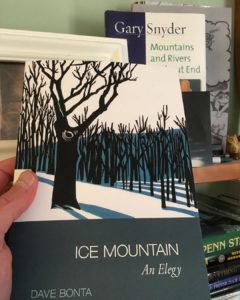
Just received word from Beth at Phoenicia Publishing that Ice Mountain has made the 2017 Banff Mountain Book Competition longlist, one of three titles in the Mountain Fiction & Poetry category, and the only book of poetry on the entire list. It’s an honor for the press and for me… and, I have to say, for the Appalachians, which don’t always rate too highly in people’s estimations of mountain-ness, being more ridgy than peaky, as well as being inhabited by one of the most mocked groups of people in the country. So, yay for us! Here’s the text of the announcement from the Banff website:

The Banff Mountain Film and Book Festival celebrates mountain literature and film, bringing together filmmakers, writers, publishers, editors, photographers, athletes, adventurers, and – of course – readers. Featuring film screenings, guest speakers, readings, seminars and book signings, the Festival offers a wide spectrum of experiences for the mountain film and book-loving audience.

As a key program of The Banff Mountain Film and Book Festival, the Book Competition is an internationally recognized literary competition that celebrates mountain literature in all its forms. Over $16,000 in cash is awarded annually with 8 awards selected by an international jury of writers, adventurers and editors. The shortlist of category award winners eligible for the Grand Prize is announced in October every year. In 2017, the Grand Prize will be announced on Thursday, November 2 at The Banff Mountain Film and Book Festival and category awards will be presented to winning authors.

The Mountain Fiction & Poetry category “Includes fiction and poetry books with a focus on mountain topics. Creative narratives about climbing and mountaineering, exploration and mountain culture are acceptable.” The other two finalists are In Case I Go by Angie Abdou, Arsenal Pulp Press (2017) and Rising Abruptly: Stories by Gisèle Villeneuve, University of Alberta Press (2016). Congrats to both.

What I did this summer, Part 2: Poetry videos galore!

[See Part 1] Since I was spending the summer in London where the wifi is blindingly fast compared to Plummer’s Hollow, it would’ve seemed like a waste not to make at least a few videopoems, as I noted in a post at Via Negativa on July 31. I ended up making seven main videopoems, plus two, just-for-fun experimental extras. Three were remixes of old home movies in the public domain (which involved also taking advantage of the lightning-fast download speed to grab clips from the Internet Archive), and the rest were from short videos that I shot on my hand-me-down iPhone 4S and edited on my laptop (using Magix Movie Edit Pro and Audacity). Here they all are in order, with brief descriptions mostly cribbed from posts I wrote at the time.

My first videopoem of the season, one of those two experimental ones I mentioned (though they’re all experimental, really), is a whopping six seconds long. I happened to be filming tendrils of wisteria waving at the top of the back-garden elder tree while Rachel was on the phone to her dad, and I thought this snippet of her conversation worked great as a fragment of found poetic text:

Purely cosmetic! You don’t actually have to be able to see at all.

It’s also just a fun challenge to find something that will work when played on a loop at Instagram.

Next up was this remix, which (as I noted on Moving Poems) matched poet Sarah J. Sloat‘s evocation of travel in the tropics to a beautifully decayed old home movie in a sort of lazy person’s homage to Stan Brakhage. The soundtrack was courtesy of the bird-sound library xeno-canto, from recordist Rodrigo Dela Rosa in the Atlantic rainforest of Brazil. The footage had been lightly edited from a single movie at the International Institute for the Conservation, Archiving and Distribution of Other People’s Memories (IICADOM). (And then I added three more paragraphs of process notes which you can read there, if you’re interested.) I remain really proud of this effort, though I’m not sure it quite measures up to my earlier remix of a Sarah Sloat poem, Grassland. (Which was screened at the MIX 2017: Writing Digital conference this summer at Bath Spa University. Yay me.)

And that remix was so much fun, I had to make another:

Ornithology recycled an old text of my own to accompany some marvelous footage from another old home movie of unknown provenance. A birder struggling through quicksand becomes a metaphor for our mostly fruitless efforts at transcendence, as I wrote when I posted it on Facebook. I was gratified to see some my birder friends like and share it.

A road trip to the Flag Fen Archaeology Park near Peterborough and the John Clare cottage not far away led to this attempt to imagine the fens as someone in the Bronze Age might’ve seen them. It got the fewest views of any of my major efforts this summer, which I think speaks to the somewhat obscure subject matter for anyone not up on British archeology. The first lines came to me in a dream as I was sleeping in a room at the Bluebird Inn, next door to Clare’s cottage. I woke up to write them down, and in the morning we stopped along the road to shoot the extra footage with which the video concludes, so for once this video was kind of almost planned out — without going so far as to storyboard it or anything crazy like that. The first part of the video shows a section of the 3000-year-old preserved causeway at Flag Fen where bronze swords and other items were ritually deposited in the mud in a place which archaeologists believe was favored for its liminality — part land, part water. The John Clare poem quoted at the end is “Autumn,” which concludes:

Hill-tops like hot iron glitter bright in the sun,
And the rivers we’re eying burn to gold as they run;
Burning hot is the ground, liquid gold is the air;
Whoever looks round sees Eternity there.

OK, so that was all maybe a bit too high-concept there.

Next came my most ambitious remix and found-text experiment of the summer. With all the nuclear brinkmanship from the Trump and Kim regimes, not to mention the US establishment’s apparent desire to return to some kind of Cold War with Russia, I somehow got the idea of remixing the audio from a 1930s film about the forest products industry with atomic test films and a US government propaganda film about nuclear war from the 1950s. Fun! The result may or may not be lyrical, but it fits the broader definition of videopoetry, I think. Also, male omniscient narrator voice-overs from the mid-20th century just have the most awesomely portentous quality, don’t they? I’d wanted to do something like this for years.

Another found-text quickie. This time, the text took the form of large letters from an outdoor installation at Tate Modern. Despite the jokey title/text inEPT, my managing to hold the phone camera as still as I did for half a minute demonstrated a rather surprising degree of eptness, I thought.

Like Ornithology, Falling recycles an old text, delivered via voice-over. This one went through multiple edits as I prepared it for entry to a couple of contests (which right there demonstrates the value of contests, I suppose). My biggest innovation was adding a brief introduction — the sort of thing I might say at a live reading. Despite the poor resolution of that (I hadn’t realized that the selfie setting on an iPhone shoots at lower quality, and my attempts to redo it with Rachel filming fell flat), I think it’s an attractive approach and one I plan to come back to. As for the clips and audio for the poetry portion, here’s what I wrote at Via Negativa. I hadn’t meant for the video to seem quite as topical as it ended up being, what with monster hurricanes and Trump’s rescinding of DACA in the news.

A quick, silent videopoem made with text-on-screen from what was at the time my most recent erasure poem based on an entry from Pepys’ Diary. I’m indebted to a friend, Rachel Shaw, for commenting on the footage I used — a shot of London’s Notting Hill Carnival, which I’d posted to Facebook as-is — that it was “weirdly beautiful with the sound off. Like anemones and seaweeds waving in the current.” Her comment was much in my mind as I wrote the erasure poem, which lo and behold turned out to be just the right length for a half-minute video.

My last videopoem of the summer was also my first since coming back, and thus helped me reacquaint myself with the somewhat more, um, deliberate pace of things here in DSL land. A recent poem by my Via Negativa co-blogger Luisa A. Igloria seemed like a good match for a video I shot on my iPhone through the dusty window of a Greyhound bus as I was leaving Newark, New Jersey on my way home. The light was wonderful and evocative, as were the murals on the wall below the train tracks. And I learned how to do new things with semi-animated text — a fun conclusion to a season of experimentation, discovery and occasional break-throughs.

What I did this summer, Part 1: The terroir of London homebrewing

Over the past few years, I’ve become interested in the concept of terroir, traditionally “the site- or region-specific characteristics of a wine,” as it might apply to beer and brewing, both for environmental reasons — imagine the carbon footprint of beer made as per usual with malts and hops from half-way around the world — and also as a way of getting to know a place better and feeling more at home in it. I know I’m far from the only brewer or beer fancier to feel this way; at least two of the local breweries here in central PA now make a point of trying to use local hops, and I’ve heard about small, regional maltings being developed around the US. But in the UK, regional maltings never quite went away, and as for hops, if you’re in London or really anywhere in the southern UK, you’re not too far from Kent, where some of the most sought-after hops in the world are grown.

This summer, I had the opportunity to really revel in that. Read the rest of this post at my homebrewing site, Herbal Brewing.

Ice Mountain: now available in album form!

My book Ice Mountain: An Elegy has been made into an album! I couldn’t be more excited or pleased with the result. You’ll probably recognize the composer’s name from all the videopoems he’s made for my poems over the years (including the video trailer for Ice Mountain): Swoon AKA Marc Neys.

The mythical Irish hero Fionn mac Cumhall is said to have held that the greatest sound in the world is “the music of what happens.” Over the past two decades, I’ve really come to identify with this sentiment, learning to appreciate the happy accidents in natural and human-made soundscapes sometimes as much as, if not more than, composed music. I’d like to think it’s even shaped my writer’s ear.

There’s something of that spirit in this album. Liquid and icy textures, hissing, rustling, crackling, and other aural interventions are interwoven with piano notes and long-held orchestral chords, all adding up to a music as spare and minimalist as the poetry itself: Marc’s own selection of a few of his favorite poems from the book.

The poetry is presented in four distinct voices, and though it doesn’t dominate the other music, you don’t have to strain to understand the words. Sometimes layered and repeated, these readings are the work of me, both my parents and the precocious young daughter of a friend (who kind of steals the show, in my opinion). Bookended by two instrumental tracks, Ice Mountain allows an attentive listener to experience something of the stark grandeur of an Appalachian winter and early spring. And for many of you in the northern hemisphere, a blast of Arctic chill might be just what you need right now.

The album is only available in digital form, via Bandcamp: listen and download here. Marc is asking a paltry €6 — roughly the cost of two fancy cups of coffee these days — and if you’ve already purchased a copy of the book, take a photo of yourself with the book and email it to Marc (swoonbildos [at] gmail [dot] com) and he’ll send you a copy for free!

Ice Mountain makes its way into the world

Ice Mountain the book in the hand of Matt Swayne from Instagram
photo by Matt Swayne on Instagram
I’ve been terribly remiss in updating this blog with news about my new book of poetry, Ice Mountain: An Elegy. Nevertheless, the book has been getting around: popping up on Instagram, Facebook and Twitter, and making its way into musical compositions and poetry films in places as far-flung as Belgium and Australia. (OK, pretty much just those two places. But still, that’s a lot better than me: I’ve barely left the mountain in the past four months.)

I tend to blog about such things at Via Negativa, and/or link them on Facebook, and be done with it, forgetting that I have this dandy author’s website as well. In short, like most poets, I suck at promotion. So, for example, I blogged about Marc Neys’ video trailer for the book, for which I supplied most of the footage, and Marc the music and selection of lines — a cento of his own creation. Check it out:

The next thing that happened was this terrific review of the book from poet, rabbi, and fellow Phoenicia author Rachel Barenblat:

The natural world and the manmade world are always in uncomfortable proximity here … Dave resists easy binaries. There is a kind of beauty in the salt-bleached highway that “almost shines.” But our human needs for progress come at the cost of animal lives, and this collection never lets us forget that.

Read the rest.

Further surprises awaited. The Australian multimedia artist and singer Marie Craven made two videos based on entries in Ice Mountain, one for 25 January and one for 7 March. The second included her own musical adaptation, collaborating with the composer Paul Dementio. The preceding link goes to a post at Via Negativa, but I’ll embed the videos here as well:

*

In February and March I gave local readings from the book and was pleased by the warm response of both audiences: one a nature club, the other a more literary bookstore crowd. I also recorded an interview with a local radio station (98.7 FM — The Freq) as part of an author week feature they ran in cooperation with State College’s Schlow Library. Jason Crane, the interviewer, had read the book and asked great questions — no surprise since he’s been interviewing people for radio and podcasts for many years. Listen here, or via the following embedded player:


So while I may not have been doing a proper author tour, the book has definitely been getting out there. I’m grateful for the many positive comments and mini reviews on social media, and the publisher seems happy with sales figures so far. More Ice Mountain-related things are in the works, including an album of ambient/electronic music based on the book and at least one reading in London this summer, so stay tuned!

New page on how I make poems and why I blog

I’ve just added a new artist’s statement of sorts, though unlike most such documents it focuses less on what I’m making and why, and more on how I’m making it. Perhaps it’s really more of an apologia. In the top navigation bar, it’s a drop-down link under the About Me page. Here’s how it starts:

My approach to writing focuses neither on product nor on process but on daily practice. What am I going to make today? What am I going to do right now? Is re-writing yesterday’s effort ever as important as going for a walk or reading a book to prime the creative pump anew?

I go on to argue for the vitality of the quotidian, admit to the addictive nature of creative immersion, mention that making poetry entails more than just writing for me, and conclude with some thoughts about why blogging has become so central to all this. Check it out (and if you have any feedback, feel free to comment on this post or drop me a line).

Proof

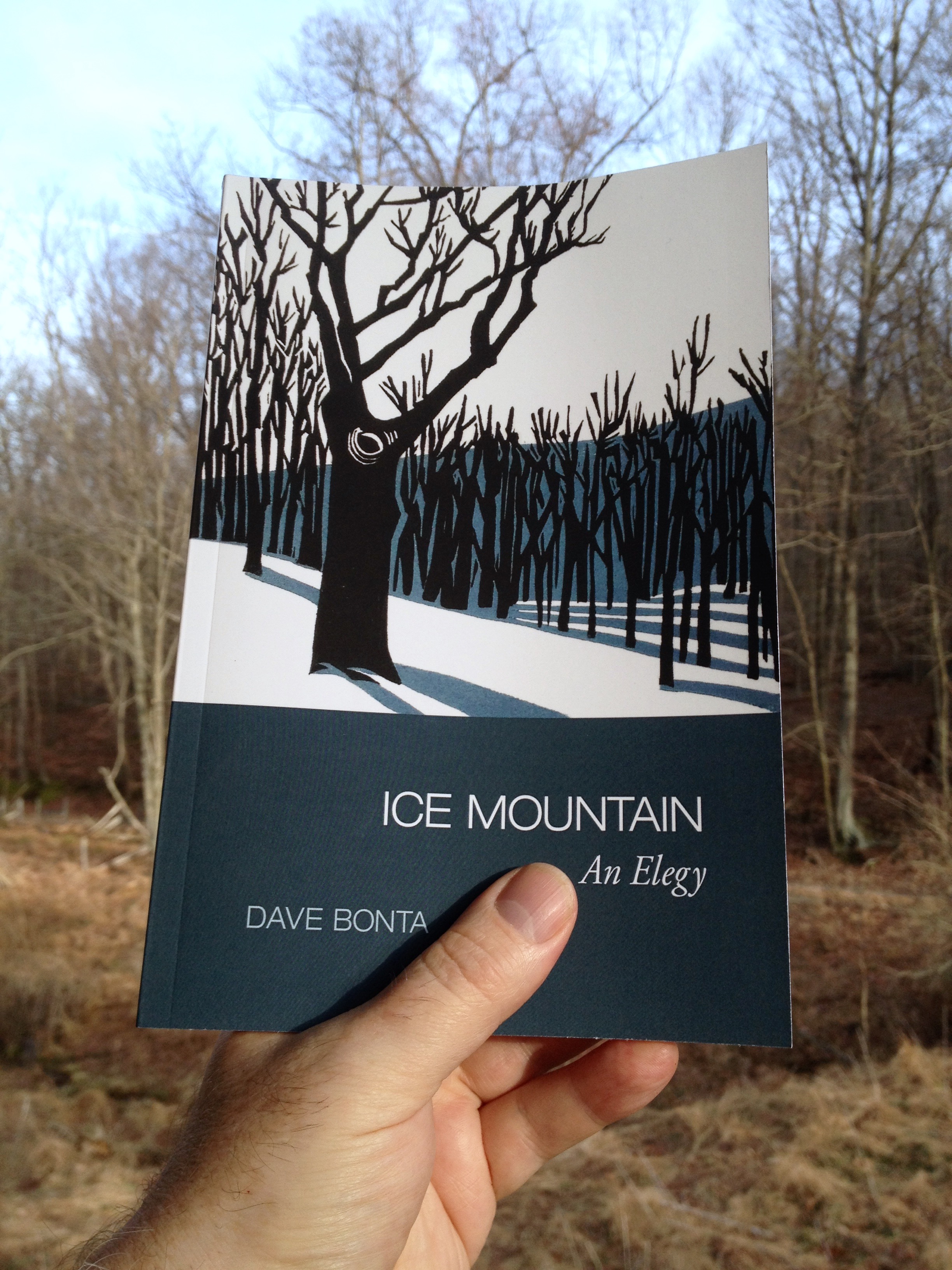
Holding a copy of Ice Mountain against the treesLike yeast, a book is proofed, in the older sense of proof/prove meaning to test. But for many authors, having a published book is proof (in the modern sense) that one is a Real Writer. When I was younger, I too might’ve felt that way. Instead, what I’m feeling now is simple pleasure at a well-made thing.

It also means, of course, that publication is imminent, and very soon I shall be endeavoring to sell physical copies in meat-space. What a concept! There will, however, be a PDF version as well for those who are decluttering, living out of their suitcases, or simply don’t like the way books gather dust (which is roughly how my late Nanna felt about books). Here’s the link to order. And here’s an excerpt.

I am also extremely pleased with the videopoem my friend Marc Neys made, based on a collage of lines from the book. He intended it as a video trailer for Ice Mountain, but it’s really a stand-alone short film. I blogged about our collaboration recently at Via Negativa.

Ice Mountain now available for preorder

cover of Ice Mountain
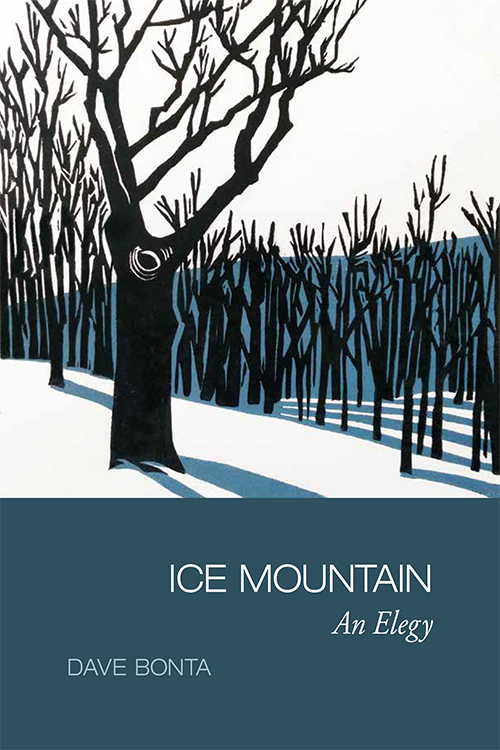
Publication of Ice Mountain is less than two months away! It now has a page on the publisher’s website, where you can admire Beth Adams’ beautiful cover illustration, read the book description and the blurbs kindly provided by two good friends, poet Todd Davis and environmental activist extraordinaire Laura Jackson, and even go crazy and order the book at the lower pre-publication price. But if, like me, you’re the discriminating sort of buyer who likes to sample first, here’s an excerpt from the book.


11 February

the crest of Ice Mountain
once harbored a rare scrub barrens
ancient trees made wayward by the wind

as I start up the ridge my tired knees
make quiet popping noises
with every step

Sancho I say to myself
those windmills aren’t giants
they’re flowers for the dead


12 February

the squirrel’s tracks end
in a smudge of blood on the snow
one tuft of fur

and the long furrow
its dangling tail drew
beside the fox’s footprints

in the field a bulldozer
lowers its blade
to a white and heavy harvest


13 February

the spruce grove
at the top of the hollow
harbors a north-woods chill

seated on a runner sled
I hurtle down
into the sunlit field

my shadow like a witching rod
stretched out before me
alive to every swell and swale


14 February

it snowed all night
I dreamt an opossum slept between us
with its death-head grin

by first light
the old dog statue in the yard
is buried up to its neck

let’s get a bowl of fresh snow
not to eat but just to admire
like cut flowers


15 February

a cottontail has squeezed
through a ring of fencing
to browse on dogwood sprouts

the snow squeaks under my boots
as I loom up
and it forgets how to escape

the small animal
beating against its cage
like a panicked heart

*

(UPDATE) Here’s the video trailer by Marc Neys AKA Swoon:

*

Beth’s print for the cover is titled Porcupine Tree, and it’s based on an actual tree up on the ridge that’s long been home — and food — for a series of porcupines, an animal with which I feel a certain affinity. Here’s how it looked ten years ago:

https://www.flickr.com/photos/89056025@N00/344579835/

“Anatomy” made into a short film by Marie Craven

I’ve long admired the videopoetry of Marie Craven, so I was delighted the other day when she unveiled a new film she’d made with one of my Pepys erasure project poems:

Marie has just written a bit about her process in a blog post, where she says (in part):

A track called ‘Red Blood‘, from Adi Carter, is the music here. I’ve known Adi online since 2007 and we’ve collaborated many times musically in the past. His music has also featured on two other video poems I’ve put together: ‘Sometimes the Water‘ and ‘Transmission‘. For the visuals in the ‘Anatomy’ video, I went to the albums of Double-M, at Flickr, where many vintage images are available on a Creative Commons remix licence. I selected a group of illustrations on human anatomy by Elisa Schorn circa 1900. They are ‘animated’ in the video roughly 10 frames at a time, in rhythm with the music. I decided to present the poem as a stream of single words on the screen, in a slower rhythmic flow than the images. This resolves into a full presentation of the written piece at the end, with its original formatting, as on the page. So pleased to have made this one, and especially that both Dave and Adi are happy with it too.

There have been some interesting reactions on Facebook and at Via Negativa. I liked this comment from Jean Morris:

So cool – I love this! Gorgeous graphics, and one word at a time seems so right for an erasure poem, referencing the writing process, whilst not fragmenting the poem.

And this observation by Dylan Tweney encapsulated my reaction as well:

This video is a fantastic experience. Something really strange happens as I try to concentrate on the words while also attempting to take in the anatomical paintings flashing behind them. The anatomies become very surreal and weird in my peripheral vision somehow. Meanwhile each word takes on a strange weight and an unusual resonance. I love it!

As I said at Via Negativa, I feel that this is one of the best things that can happen to a poet — way more exciting than merely placing a poem in a magazine somewhere. Anatomy went straight into my Plummer’s Hollow Poet channel on Vimeo (which also includes Marie’s earlier native land remix of a linked-verse videopoem I’d made).

New book “Ice Mountain” due out in January from Phoenicia Publishing

I’m excited to have a new book of poetry coming out from Montreal-based Phoenicia Publishing, who also published my Odes to Tools. Here’s the announcement.

Phoenicia is delighted to announce the forthcoming publication (January 2017) of Dave Bonta’s Ice Mountain: An Elegy.

After several weeks of daily walks in the Pennsylvania mountains with a temporary canine visitor, Dave began a new series of poems:

“I decided to see how much I could discover on my own, walking at a much slower pace but without the aid of a dog’s nose to show me where a coyote had paused or which hollow logs might harbor rabbits or porcupines. The exploration continued when I sat down at the laptop, and I often ended up writing about things I’d remembered or thought about as I walked.”

But there was a darker side, too. The Ice Mountain of the title is a nearby peak that was desecrated by a large wind farm, after a six-year struggle to fight it by local environmental groups who knew the turbines would have a huge impact on bats, songbirds, migrating hawks, and other species. Written as winter gives way to spring, the resulting short, daily poems are an elegy for an endangered ecosystem, as well as a celebration of its diversity and determination.

Ice Mountain will also have original linocut illustrations by Elizabeth Adams. Sales will benefit the environmental non-profit organization SOAR, Save Our Allegheny Ridges.

Click through for a delightful photo (excerpted above) by Rachel Rawlins of me falling through the ice on top of our mountain while the dog looks on with ears raised, as well as an example of Beth’s beautiful linocut technique. And be sure to subscribe to the Phoenicia newsletter for regular updates on all their publications.