
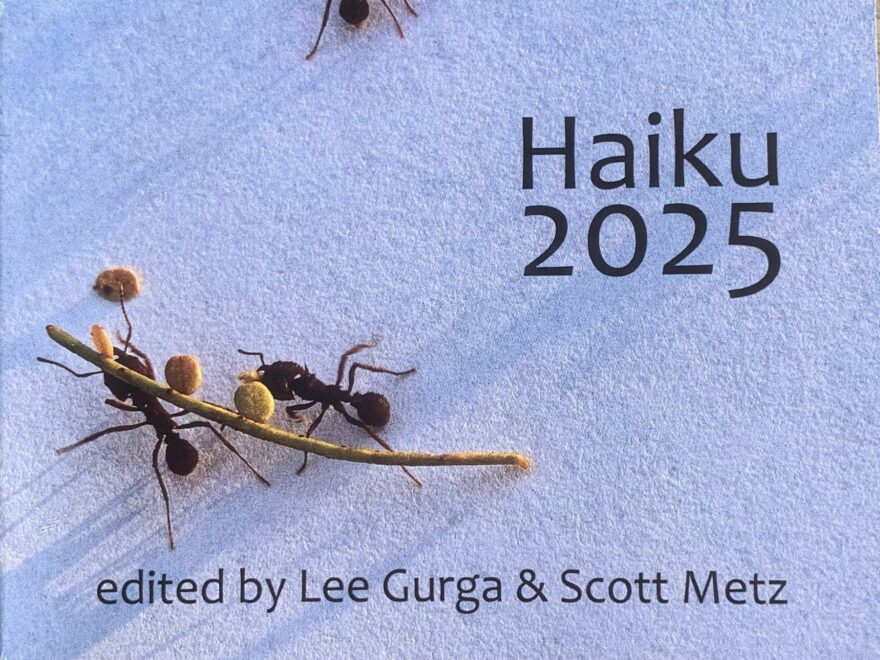
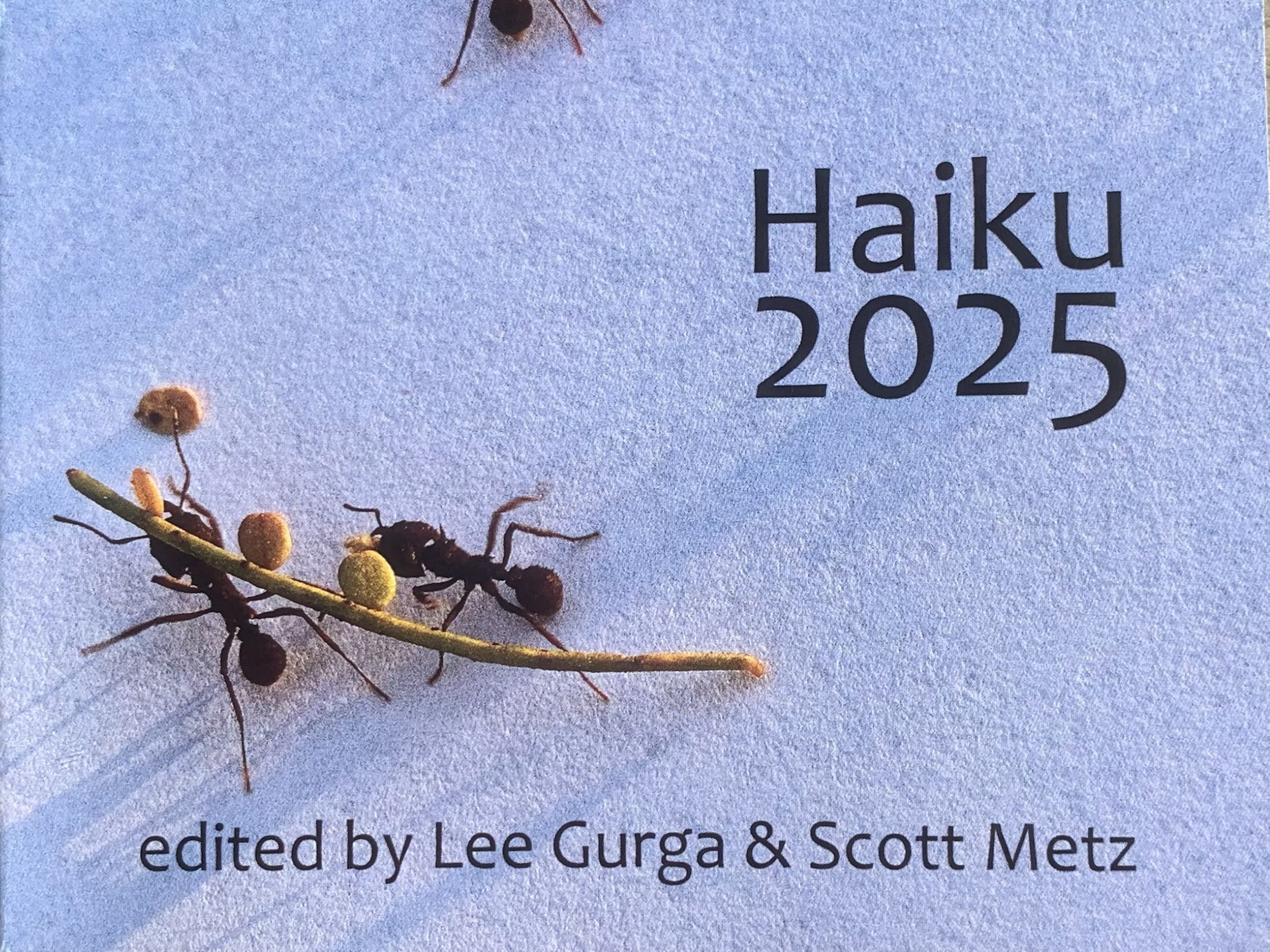
It’s one thing to have work that you submitted appear in anthologies; it’s quite another to have your already published work selected for an anthology, without having to submit or ever know about it! You just get a polite request in your inbox one day for inclusion in an annual anthology series that you’re happy to have an excuse to read through. It was a thrill to appear in Haiku 2025 from Modern Haiku Press, edited by Lee Gurga and Scott Metz, because Haiku 21, their original volume that started this series showcasing more experimental haiku, has been such a huge influence on me. They chose a monoku I’d had in Frogpond,
being measured for a coffin first snowflake
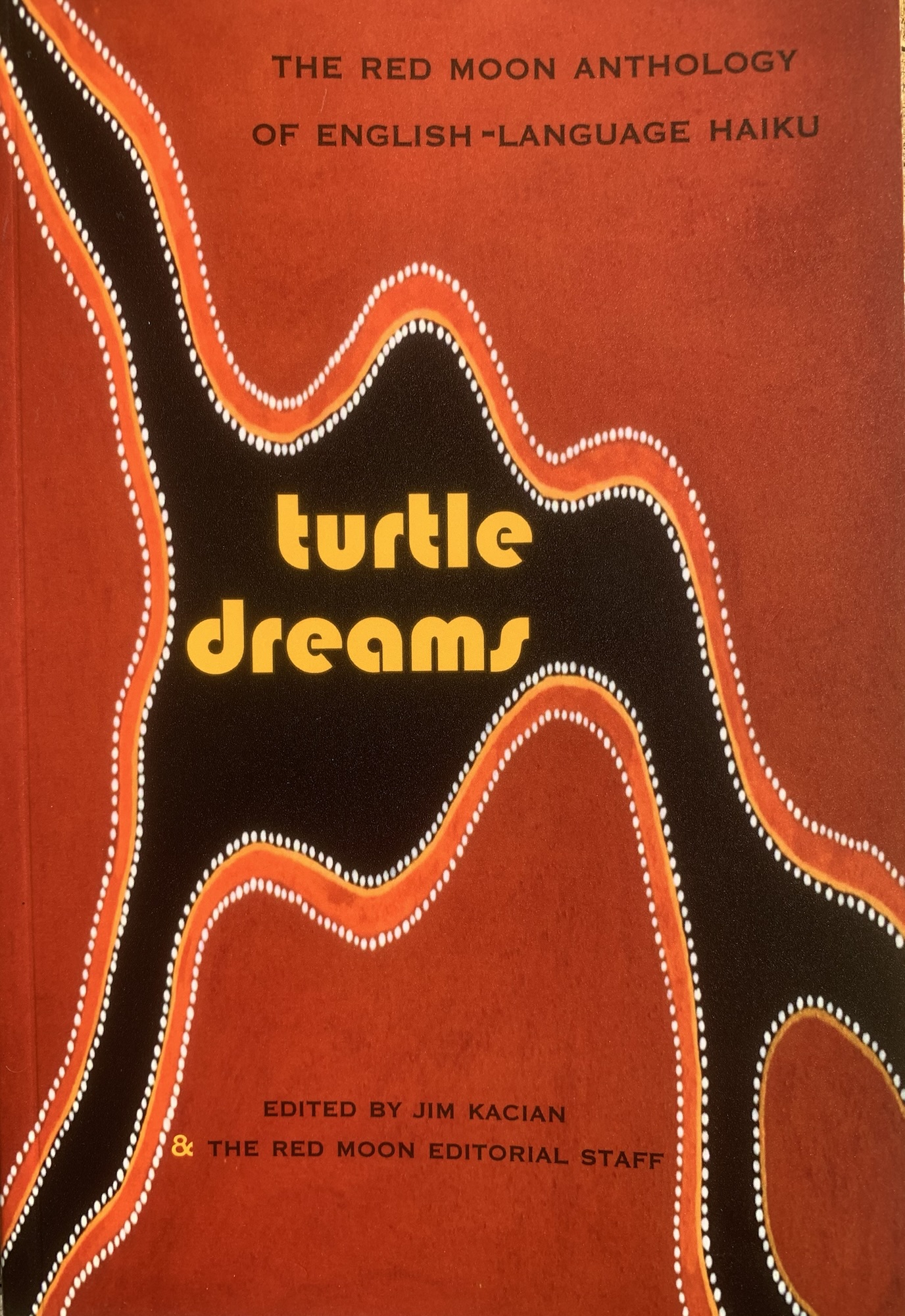
And more recently, I was honored again to get a request for inclusion in the annual Red Moon Anthology of English-Language Haiku, titled Turtle Dreams for 2025. They wanted the text of a monoku that had appeared as part of a photo haiga in whiptail:
day moon the weight of a stone in my pocket
Needless to say, this gives me another reason to keep submitting to haiku journals! But it’s also helped me understand why I am so uninterested in submitting to most regular literary magazines: at the end of the day, I know I won’t resonate with 80-90 percent of their contents, and therefore I’d have difficulty even summoning the enthusiasm to brag about it on social media, let alone post about it here. By contrast, I’ve been noticing as I’m reading Turtle Dreams that I seem to average about one “wow!” for every two-page spread of four or five haiku, which to me makes it well worth the price. And when your disposable income is as limited as mine, that’s a real consideration. I can go on eBay or visit Webster’s Bookstore in State College, PA, and for less than ten dollars pick up a poetry collection by an individual author whose work I know I’ll like, so spending the same or more on an issue of a literary magazine is rarely an attractive proposition.
Of course, there are a few haiku in each of these two anthologies that strike me as overly cerebral, overly obvious, or otherwise not entirely successful, and that’s typically my experience when reading the journals they’re drawn from. But my heart breaks a little sometimes when poets far more talented than me post about how excited they are to finally land a poem in some literary magazine synonymous with establishment stuffiness. I find the haiku journals, by contrast, full of fresh and exciting work that often evinces real knowledge of the natural world. And that’s an increasingly rare thing.